

The skincare industry has spent decades selling products designed to work on the outside. Creams, serums, and treatments are applied topically to address what is fundamentally an inside problem. That model is shifting. Skin longevity, the idea that healthy, resilient skin over the long term is a function of systemic health rather than topical intervention, is one of the most significant wellness conversations of 2026, and it is backed by a growing body of research that most dermatologists and chiropractors alike are paying attention to.

Skin is not separate from the rest of the body. It is the body’s largest organ, reflecting what is happening internally with remarkable accuracy. Chronic inflammation shows up as redness, acne, and accelerated aging. Gut dysbiosis can show up as eczema, rosacea, and dull, reactive skin. Poor circulation produces uneven tone and slow healing. Hormonal imbalance drives breakouts and collagen breakdown. Addressing those root causes produces skin improvements that no topical product can replicate, because it fixes the system the skin depends on rather than managing surface symptoms.
The Gut-Skin Axis
The connection between gut health and skin condition is now well established in the research literature. The gut microbiome regulates systemic inflammation, produces nutrients the skin uses directly, and influences the hormonal environment that determines sebum production, collagen synthesis, and skin cell turnover. A compromised microbiome weakens the skin barrier.
Research published in the journal Gut Microbes confirmed that microbiome diversity was significantly associated with skin barrier function and inflammatory skin condition severity, and that interventions that improved gut health produced measurable improvements in skin outcomes.4Fermented foods, prebiotic fiber, reduced sugar and processed food intake, and adequate hydration are not just gut health strategies. They are skin longevity strategies.
What Else Drives Skin Aging from the Inside
Chronic cortisol elevation breaks down collagen and impairs the skin’s ability to repair itself overnight. Poor sleep reduces growth hormone output, which is the primary driver of cellular repair during the sleep cycle. Chronic dehydration reduces skin elasticity and accelerates the appearance of fine lines. Nutrient deficiencies in zinc, vitamin C, vitamin A, and omega-3 fatty acids each compromise specific aspects of skin structure and function.
Addressing those factors does not require an expensive supplement protocol. It requires the same foundational habits that support every other system in the body. Good skin in the long term is a byproduct of a body that is genuinely well looked after.
Seasonal Eating for Fall: Let the Harvest Do the Work
Food Has Always Followed the Season
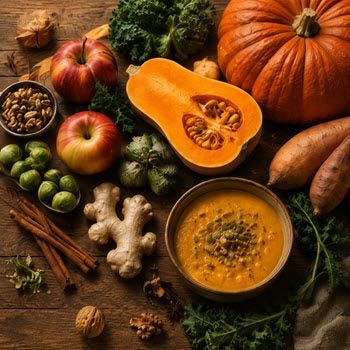
Traditional food cultures around the world shifted their diets with the seasons for a reason. Before global supply chains made every food available year-round, people ate what was local and available, and their bodies adapted to those rhythms. Fall brought root vegetables, squash, apples, dark leafy greens, and warming spices. Those foods are precisely what the body needs as temperatures drop, immune demands increase, and the nervous system begins its transition toward the slower, more restorative pace of winter.
Seasonal eating is not a nostalgic concept. It is a nutritionally sound strategy rooted in the fact that produce harvested at peak ripeness in its natural season contains higher concentrations of the vitamins, minerals, and phytonutrients it was designed to deliver. A tomato in January and a tomato in August are not the same food in any meaningful nutritional sense.
What Fall Puts on the Table
Sweet potatoes are one of the most nutrient-dense foods available in autumn, delivering beta-carotene, potassium, vitamin C, and fiber in a package that also supports stable blood sugar and sustained energy. Butternut squash, pumpkin, and other winter squashes share a similar profile and are among the richest dietary sources of carotenoids, the plant compounds that support immune function, reduce inflammation, and protect cellular health.
Dark leafy greens like kale, Swiss chard, and collards reach peak nutritional density in cooler weather. They deliver vitamin K, folate, magnesium, and a range of anti-inflammatory compounds that directly support bone density, nervous system function, and spinal health. Apples and pears bring prebiotic fiber that feeds the gut microbiome at exactly the time of year when immune demands are climbing.
Research published in the British Journal of Nutrition found that diets rich in diverse seasonal produce produced significantly higher antioxidant capacity and lower inflammatory markers than diets relying on out-of-season or processed food sources.5 The mechanism is straightforward. Fresh, varied, nutrient-dense food gives the body more to work with.
Warming Spices Are Not Just for Flavor
Turmeric, ginger, cinnamon, and black pepper are fall staples in traditional cooking for good reason. All four have well-documented anti-inflammatory and immune-supportive properties. Adding them liberally to soups, stews, roasted vegetables, and warm drinks is one of the simplest dietary upgrades available in autumn. The body is heading into its most immunologically demanding season. Giving it the raw materials to meet that demand through food first is always the smarter starting point.
Researching Chiropractic
Over the years, we’ve shared many stories of people who experienced meaningful improvements in their health, comfort, and quality of life through chiropractic care.
How many others living with discomfort, relying on medication, or feeling limited in their daily lives might benefit from discovering chiropractic?
Perhaps more than you think.
Disc Herniation & Chiropractic Care
Surgery for a herniated disc feels like the logical endpoint for a lot of patients. The pain is severe, nothing else has worked, and a surgeon is offering a concrete solution. Before that decision gets made, there is research worth knowing about. A study published in the Journal of Manipulative and Physiological Therapeutics examined outcomes for patients with lumbar disc herniation who received chiropractic care and found results comparable to those achieved through surgical intervention. Same outcomes, without going under the knife. For patients who have been told surgery is their only real option, that finding deserves serious consideration. Chiropractic care addresses the mechanical environment around the disc rather than the disc in isolation, and for a significant proportion of herniation cases that mechanical approach produces the relief patients have been looking for without the recovery time, the risks, or the cost that surgery carries.
Spinal Health & Breathing Capacity
Most people would not connect a chiropractic adjustment to their ability to breathe more easily. The connection is more direct than it seems. Research published in the Journal of Manipulative and Physiological Therapeutics found that combining manual therapy with exercise produced measurable improvements in respiratory function and respiratory muscle strength in healthy adults. The thoracic spine, the mid-back section that connects directly to the rib cage, plays a significant role in how freely the chest wall expands with each breath. When those segments are restricted, breathing becomes subtly shallower, and the respiratory muscles work harder than they should. Restoring thoracic mobility through chiropractic care removes that mechanical brake on breathing capacity. For patients dealing with chronic tension, poor posture, or the kind of desk-bound lifestyle that rounds the upper back and compresses the chest, improved breathing function is one of the quieter but more meaningful benefits of regular spinal care.
Humor
Why did the spine go back to school in September? Because it wanted to get a little more support.
Why did the sweet potato win the science fair? Because it had the most well-rounded nutritional profile in the class.
Why did the gut microbiome get a promotion? Because it had the best culture in the whole company.
Why did the skin specialist love autumn? Because all her patients were finally showing their true colors.
Bye!
Please write or stop by to share your feedback. Are there any subjects you’d like to hear about? Anything you dislike? Feedback is always important to us.
