

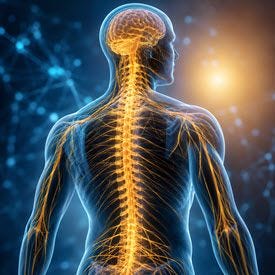
Most people think of chiropractic care as something you do when your back hurts. That is understandable, but it misses about 90% of what is actually happening when a chiropractor works on the spine. The spine is not just a stack of bones. It is the primary housing for the spinal cord, the communication superhighway that connects the brain to every organ, muscle, and tissue in the body. When that highway has bottlenecks, the whole system pays for it.
Chronic stress, poor posture, old injuries, and the general grind of daily life all create spinal restrictions that interfere with normal nervous system signaling. The body compensates, adapts, and eventually settles into a state of low-grade tension that most people just accept as normal. Tight shoulders, poor sleep, digestive issues, and constant fatigue are not random. They are often signs of a nervous system that cannot fully shift out of fight-or-flight mode.
What an Adjustment Actually Does
A chiropractic adjustment does something that very few other interventions can claim: it directly stimulates the mechanoreceptors in the spinal joints, flooding the nervous system with fresh sensory input. That input travels to the brain and effectively interrupts the stress loop the body has been stuck in. Heart rate drops. Muscle tension releases. Patients frequently describe feeling calmer and clearer immediately after an adjustment, and that is not a coincidence or a placebo.
Research published in the Journal of Manipulative and Physiological Therapeutics confirmed that spinal manipulation produced measurable reductions in cortisol levels, the body’s primary stress hormone, following adjustment.¹ Lower cortisol means the nervous system is shifting toward parasympathetic dominance, the rest and repair state where healing actually happens.
Why This Matters Beyond Pain Relief
A well-functioning nervous system does not just mean less pain. It means better sleep, a more stable mood, a stronger immune response, and faster recovery from physical and mental stress. Regular chiropractic care is not about chasing symptoms. It is about keeping the communication network between the brain and body clear enough that the body can do what it was designed to do.
For anyone feeling chronically wired, exhausted, or just off, the spine is a logical place to start looking for answers.
Strength Training as Medicine: The Case for Lifting at Every Age
It Is Not Just for Athletes
Strength training has an image problem. For decades, it was associated with bodybuilders, athletes, and anyone chasing a certain aesthetic. That perception is changing fast, and the science driving that change is hard to argue with. Resistance training is now recognized as one of the most powerful interventions for metabolic health, longevity, injury prevention, bone density, cognitive function, and mental health. Calling it optional is like calling sleep optional.

Muscle is a metabolically active tissue. It burns energy at rest, regulates blood sugar, produces anti-inflammatory compounds, and acts as a reservoir of amino acids the body draws on during illness or stress. Losing it, which happens naturally from the mid-thirties onward without deliberate resistance training, accelerates nearly every marker of aging. The clinical term is sarcopenia, and its consequences extend far beyond looking or feeling weak.
What the Research Is Saying
A landmark study published in the British Journal of Sports Medicine found that muscle-strengthening activities were associated with a 10-17% reduction in all-cause mortality, cardiovascular disease, cancer, and diabetes, independent of aerobic exercise.6 That is a significant finding. It means lifting weights is not just complementary to cardiovascular health. It stands on its own as a protective health behavior.
Two to three sessions per week covering the fundamental movement patterns, squats, hinges, pushes, pulls, and carries, is enough to produce meaningful results for most people. The weight does not need to be heavy. It needs to be challenging enough that the last few repetitions require real effort. Progressive overload, gradually increasing the demand over time, is the mechanism through which adaptation happens.
The Spine Connection
Here is something most gym programs overlook entirely. A strong posterior chain, including the glutes, hamstrings, and spinal erectors, is one of the most effective protections against low back pain and spinal degeneration available. These muscles support the lumbar spine underload and during everyday movement. When they are weak, the spine compensates, and over time, that compensation leads to injuries.
Chiropractic care and strength training are natural partners. Adjustments restore joint mobility and neurological function, allowing muscles to functionproperly. Strength training builds the muscular support that holds the spine ina good position between visits. Patients who do both consistently tend to need less reactive care and experience more durable results over time.
Start with two days a week. Build from there. The body responds at every age.
Words of Wisdom
“The greatest gift you can give your family and the world is a healthy you.” -Joyce Meyer
“Health is not about the weight you lose but about the life you gain.” -Unknown
“He who has health has hope, and he who has hope has everything.” -Arabian Proverb
“A good laugh and a long sleep are the two best cures for anything.” -Irish Proverb

Great article, Doc! We need more writers like you in our industry!